
Magical Forest on the slope of Osorno volcano
Out of convenience reasons, the last posts were in German. But as my grandma wanted to practice her English, I’ll switch the language back for now. 🙂
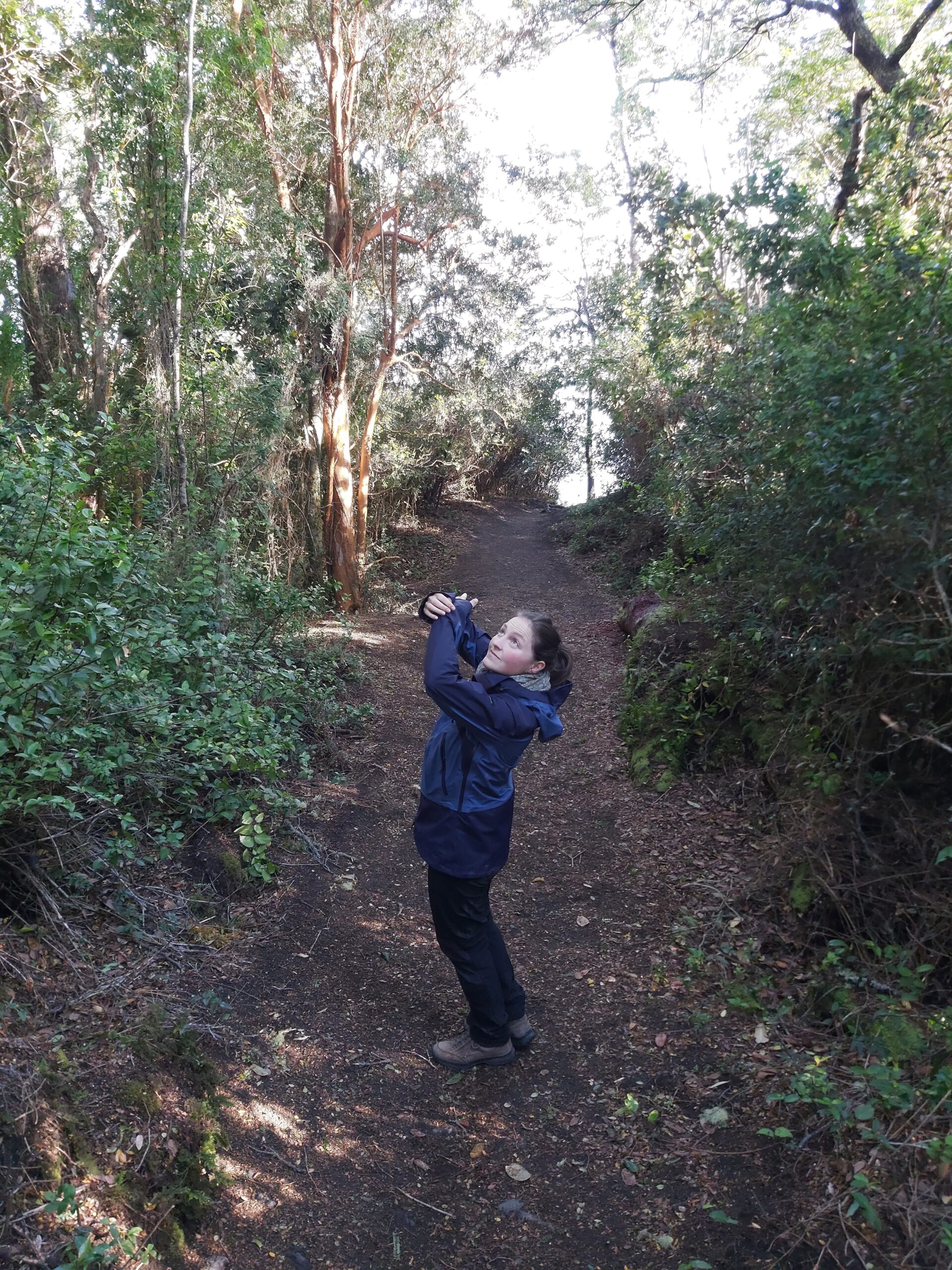
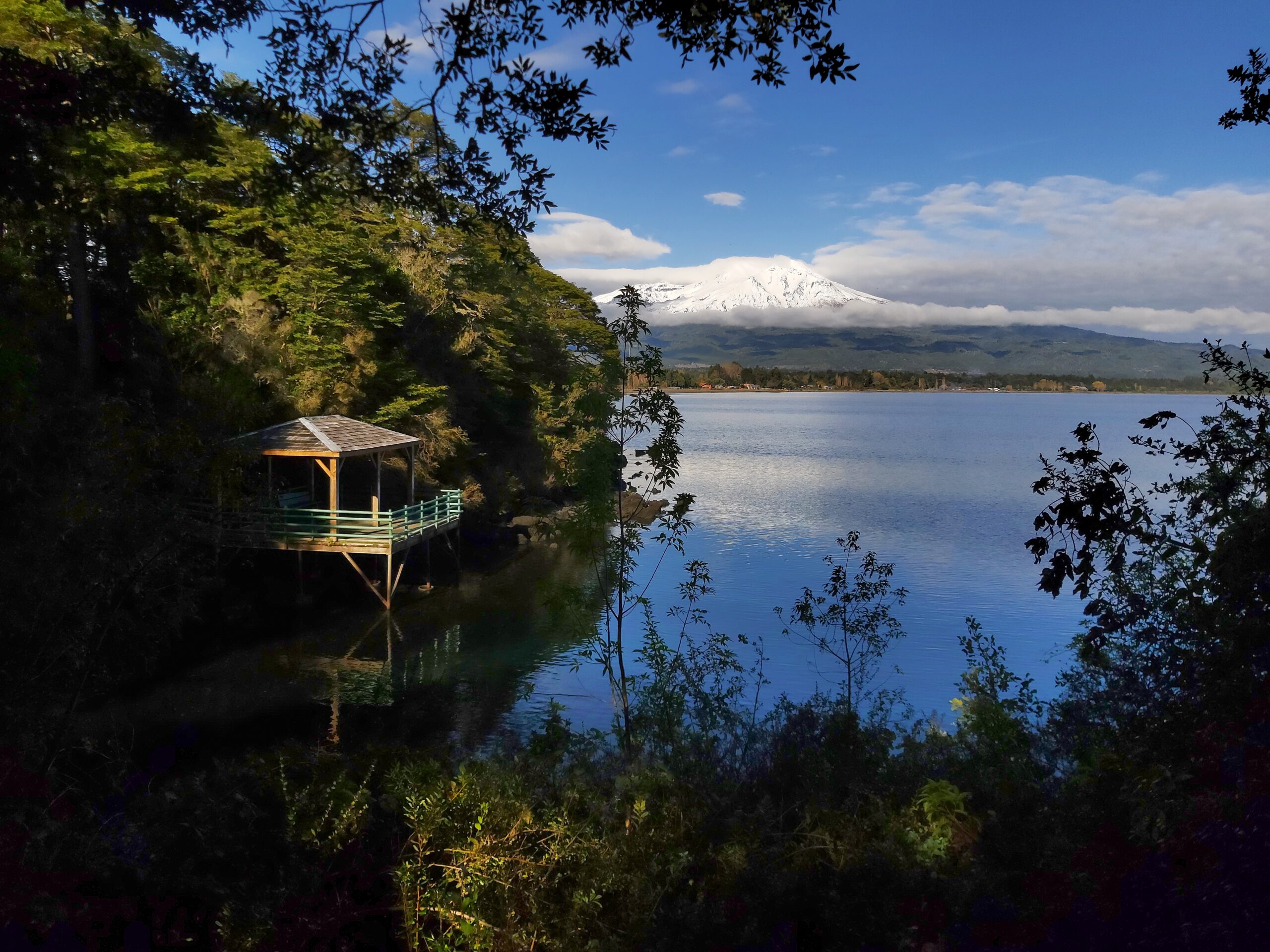
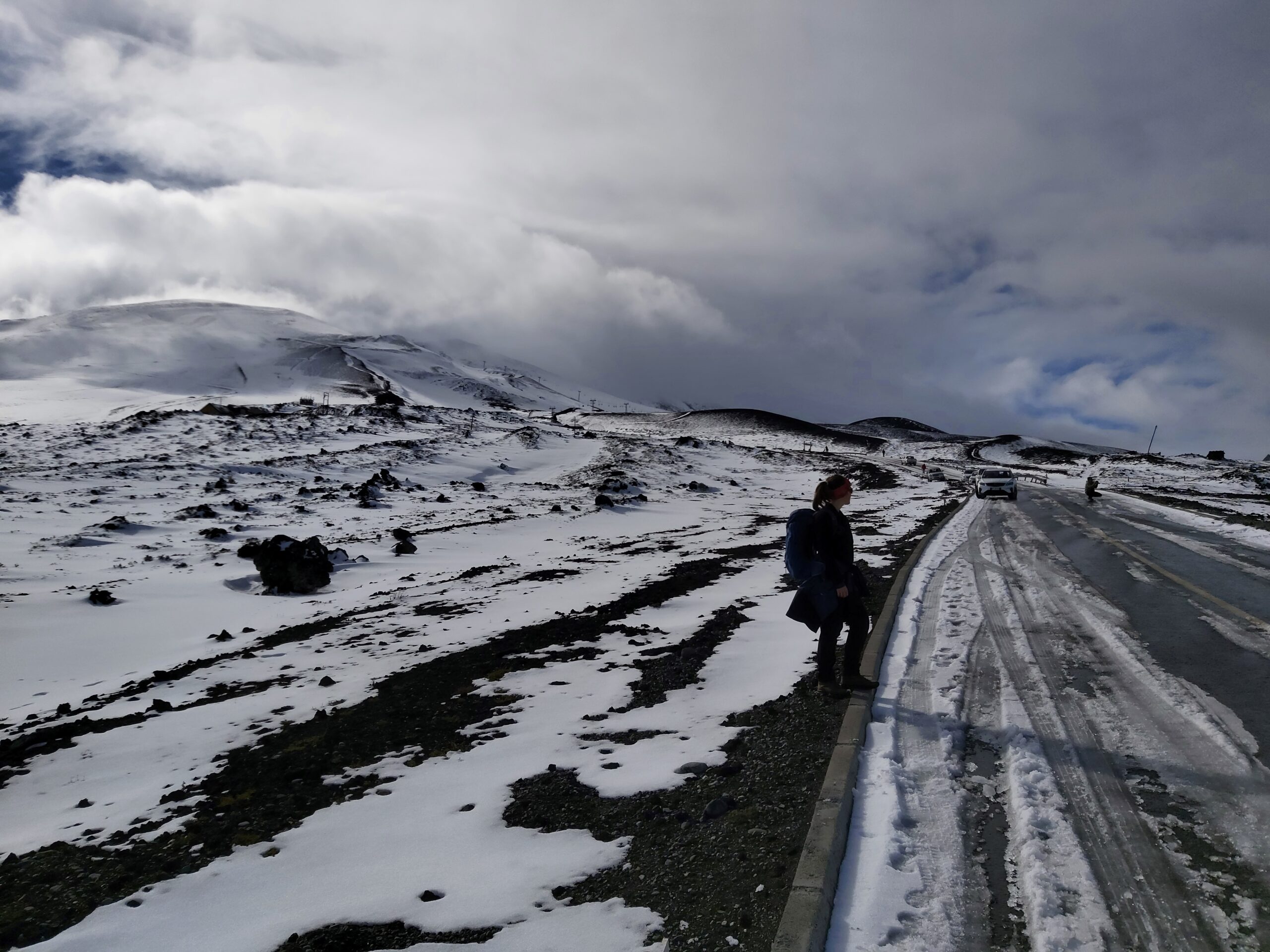
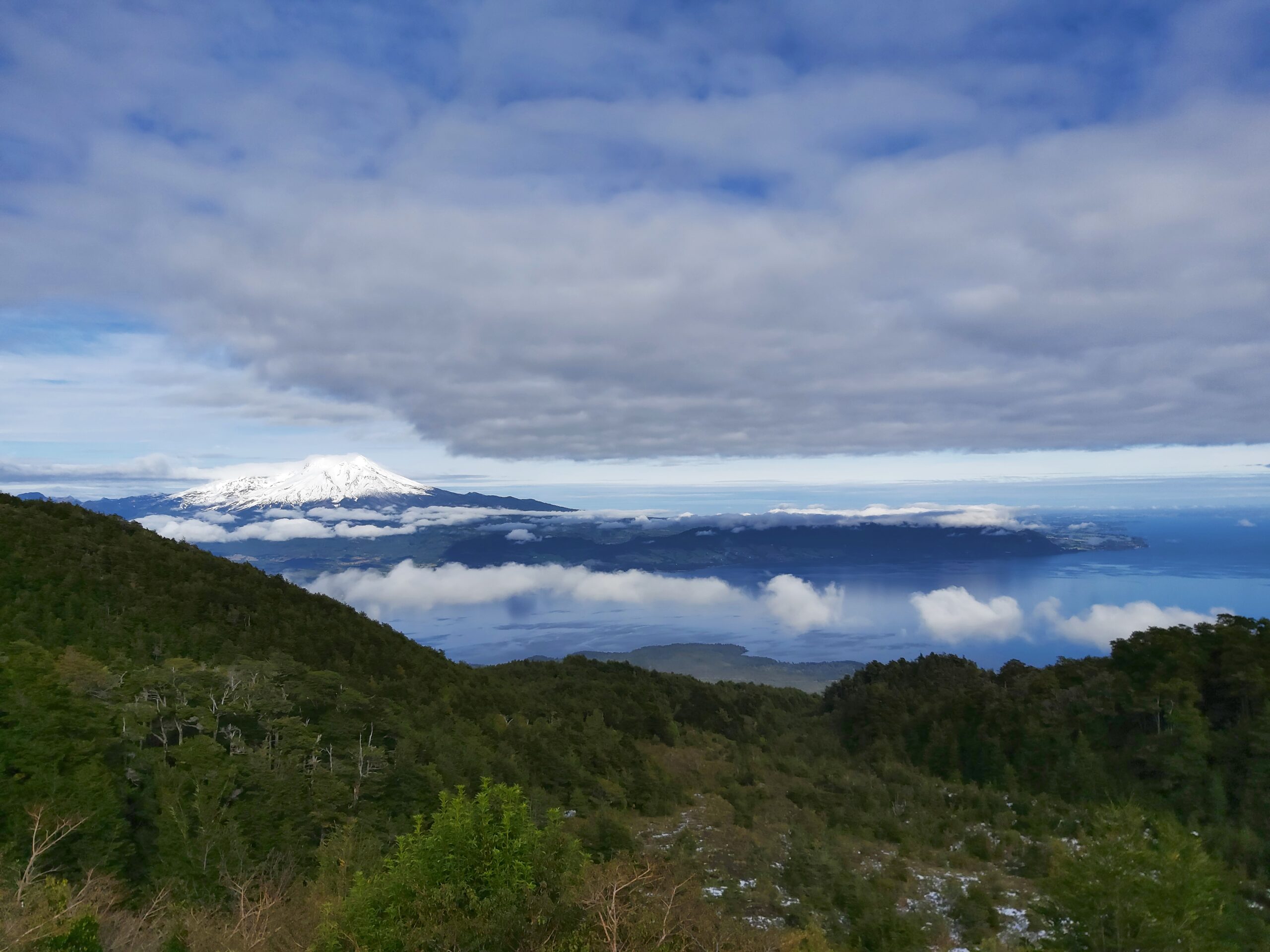
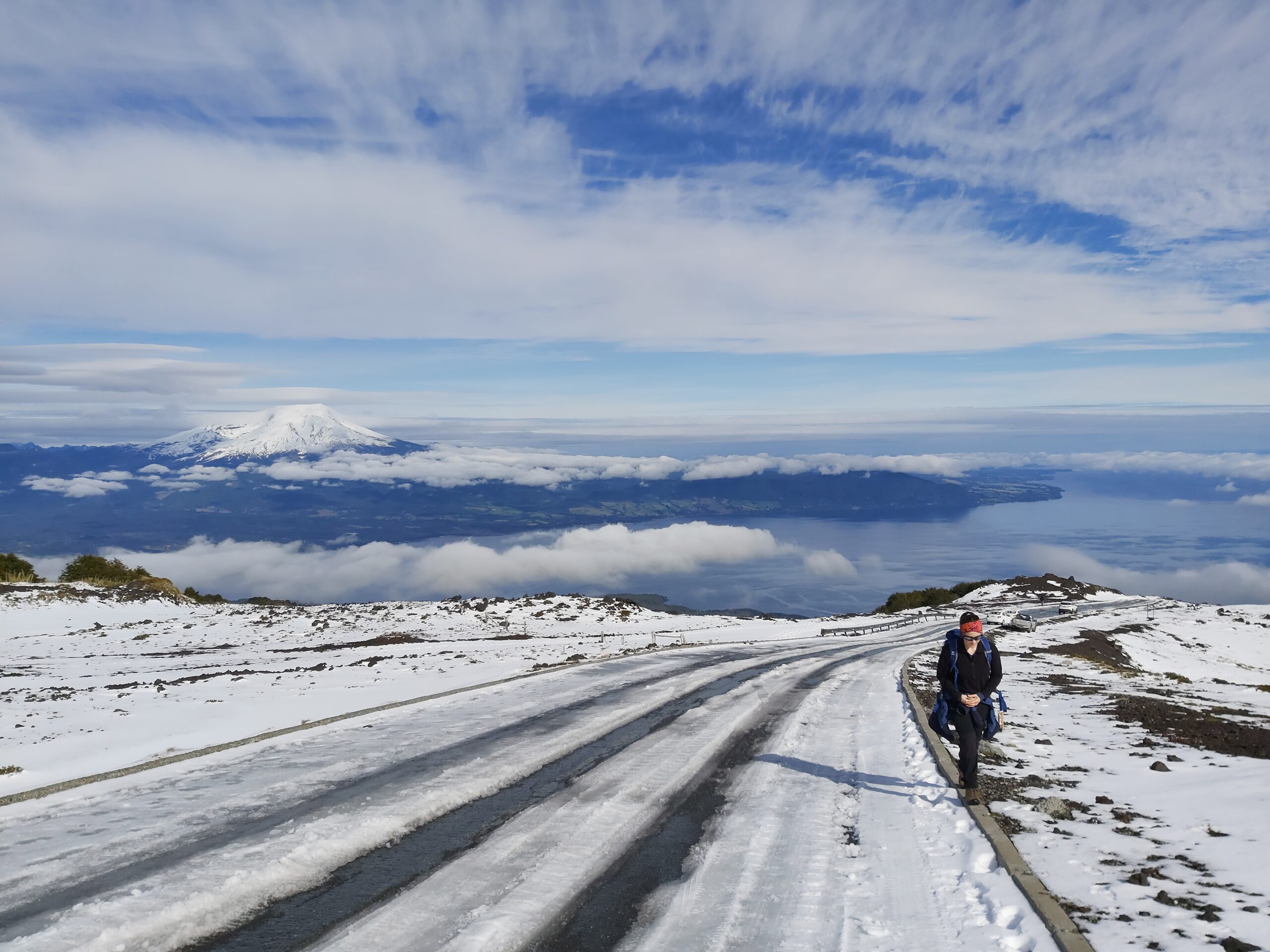
Next day, we visit Laguna Verde and then take the tour recommended by our host in the hostel. A young friendly adventurous Brazilian guy Caio, who moved to La Ensenada, runs a hostel there and together with his girlfriend cooking quite fancy breakfasts and pumpkin soup. He calls the tour El Bosque mágico translating to magical forest. It starts in the middle of the slope of Volcano Osorno, right at the bottom of the ski center, and the trail is not shown on any map we have on our smartphones. But we are promised the path is marked with colorful plastic pieces on the trees. Sounds a bit like Schnitzeljagd (hon na lišku). There is an asphalt road to the ski center, however, close before the end, the road gets a bit snowy and icy. So we leave the car in one of the serpentine turns and continue the rest on foot. I first have a bad feeling about leaving the car in the middle of a turn, but as all Chileans do it when going bobsledding there – it’s weekend – we just follow the crowd.
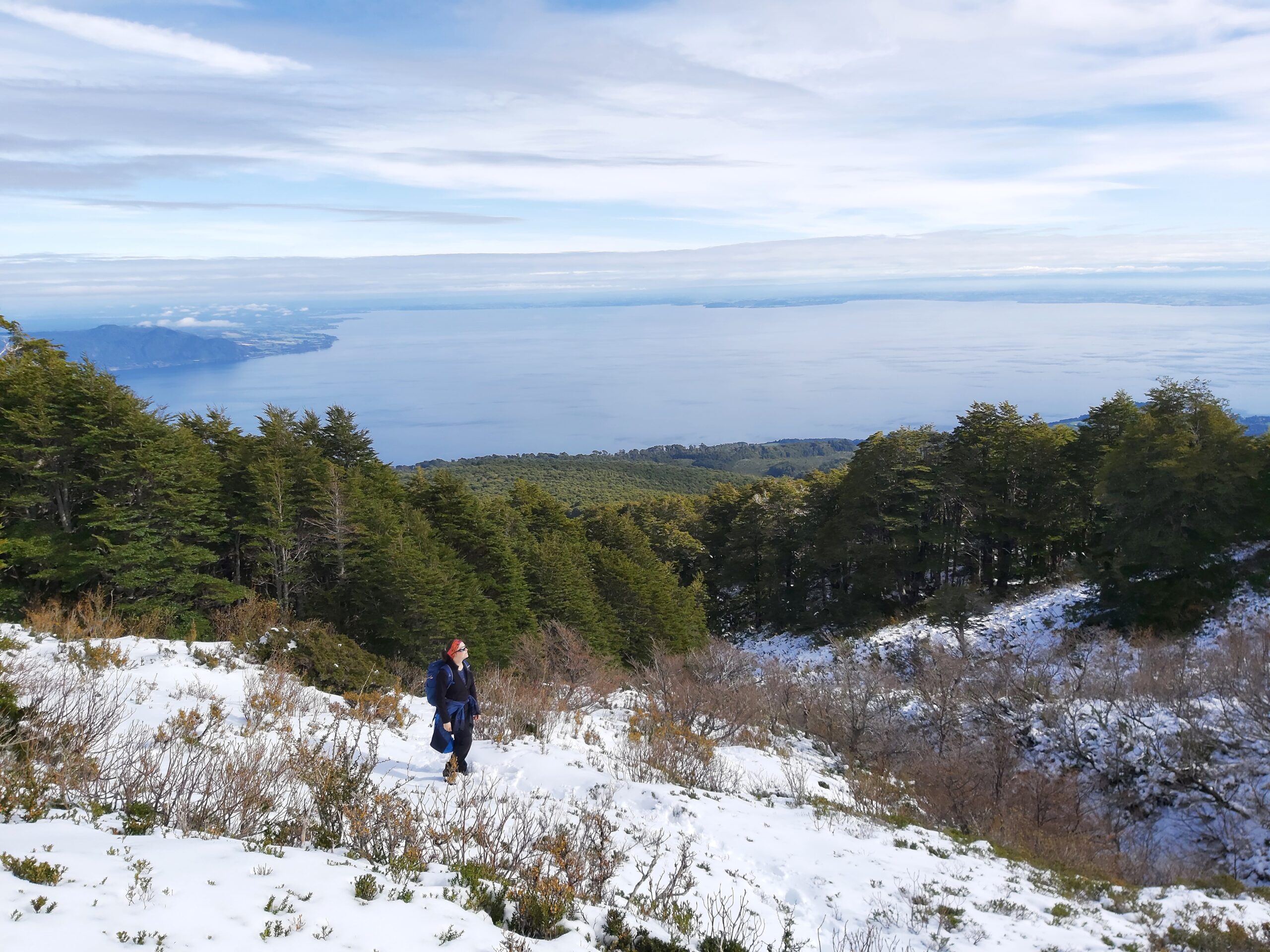

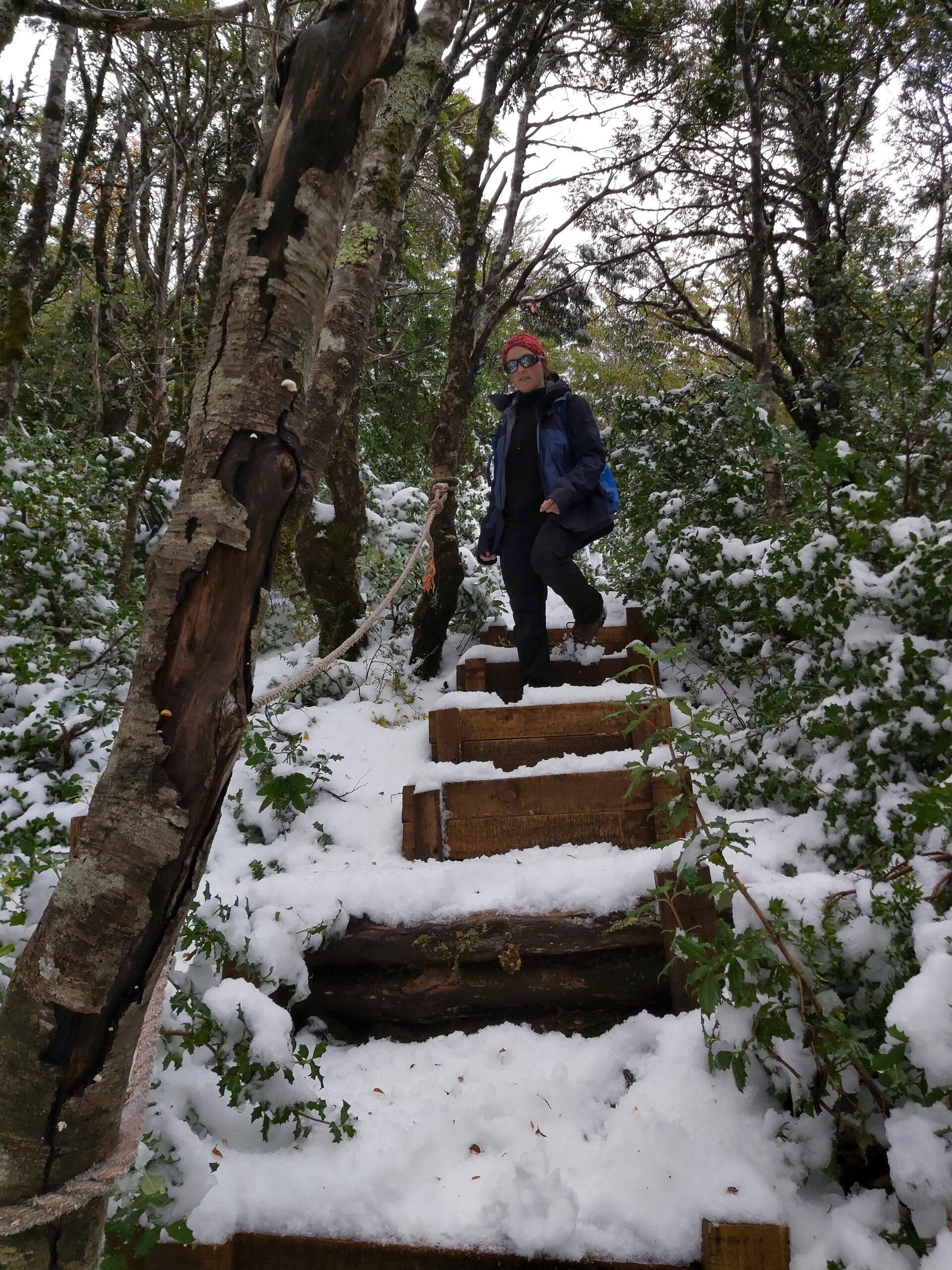
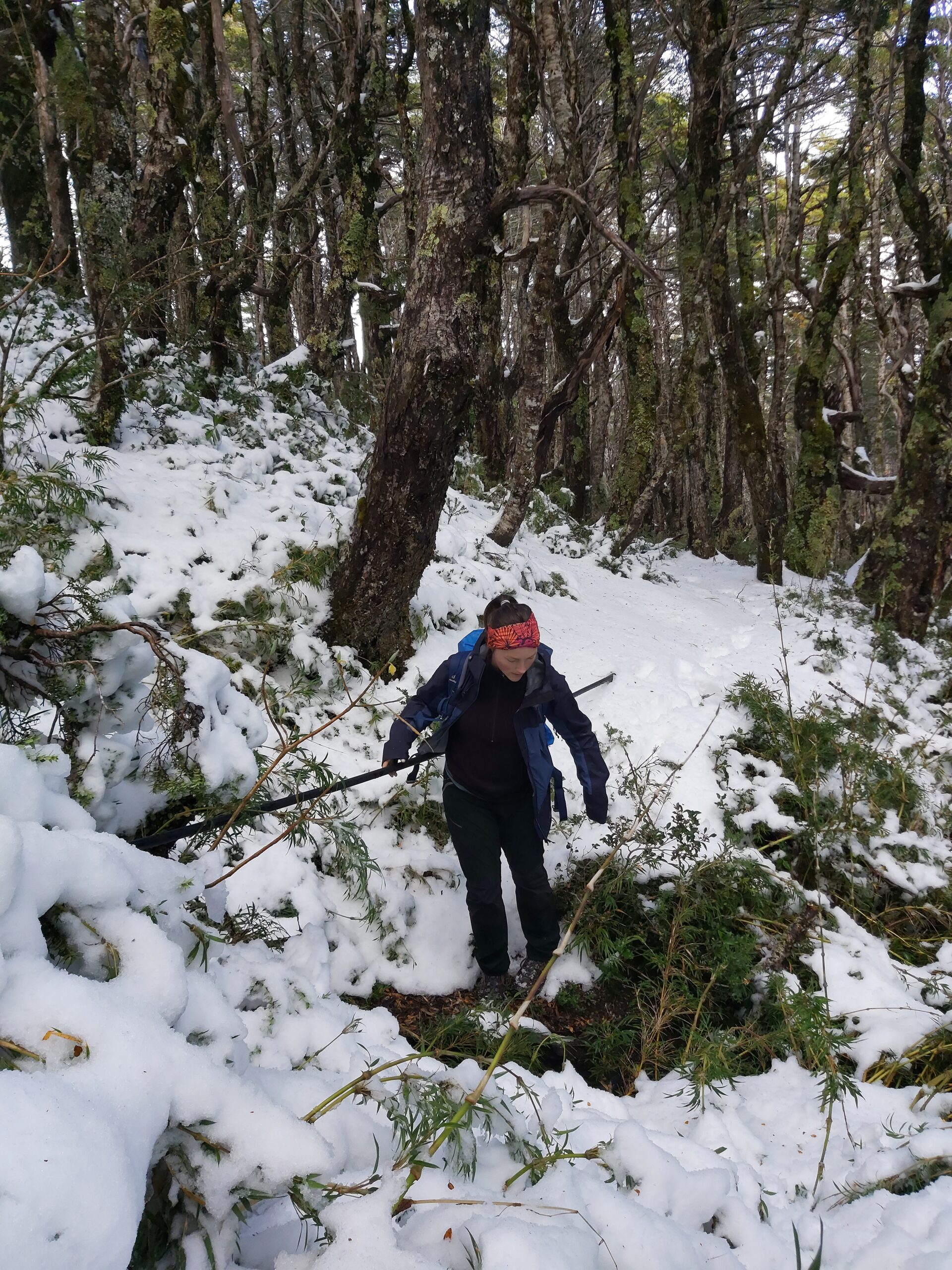

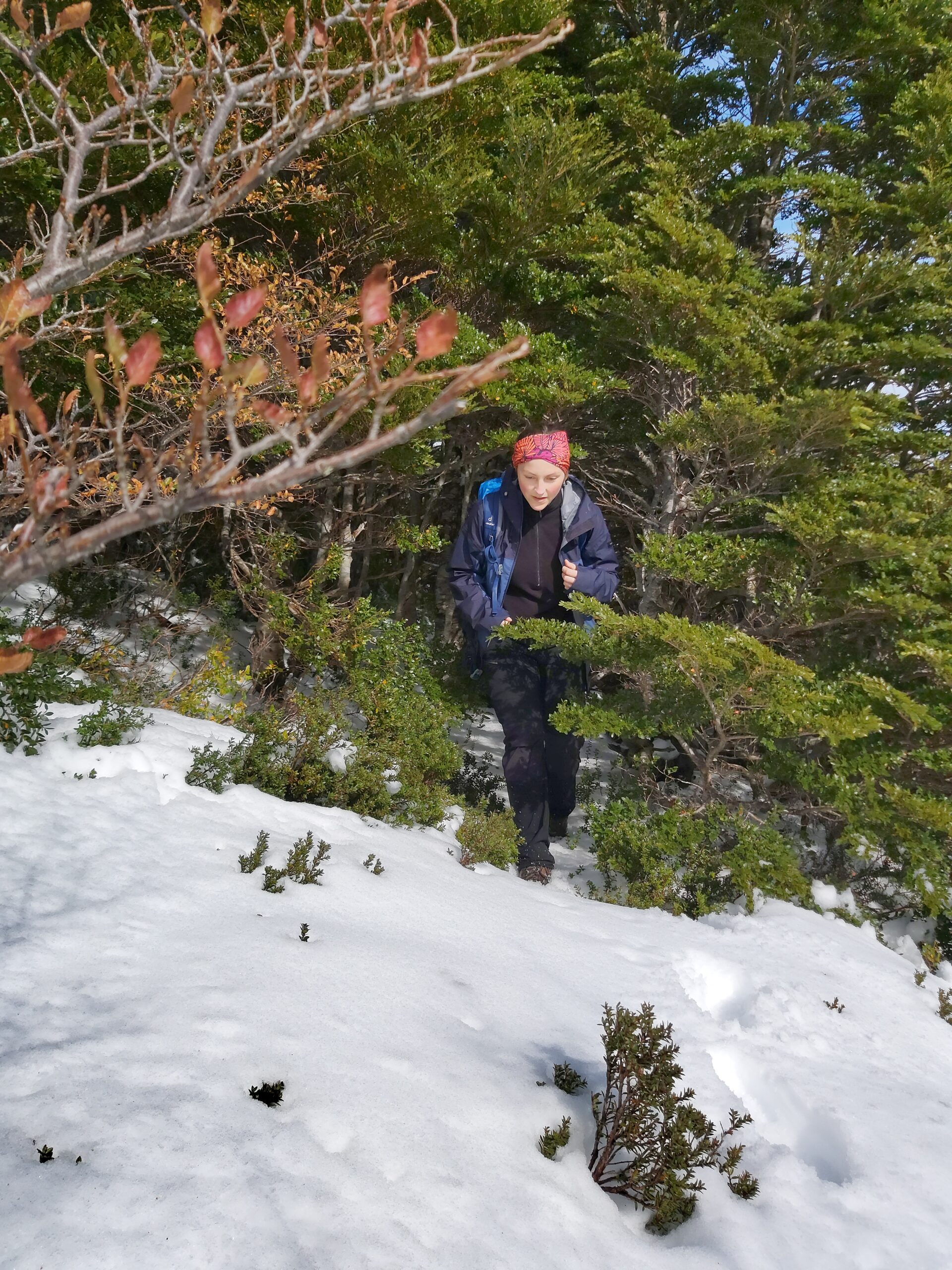
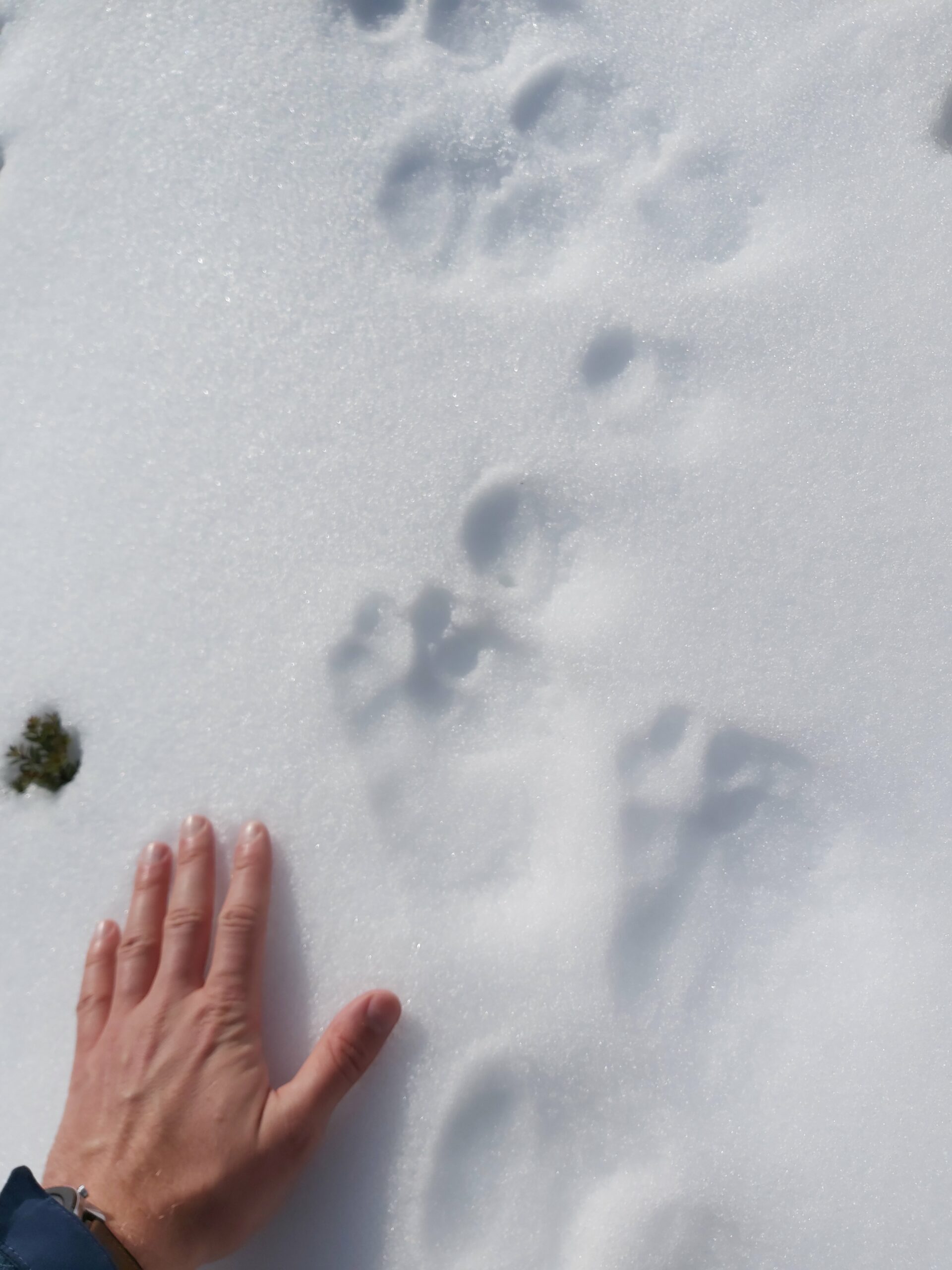
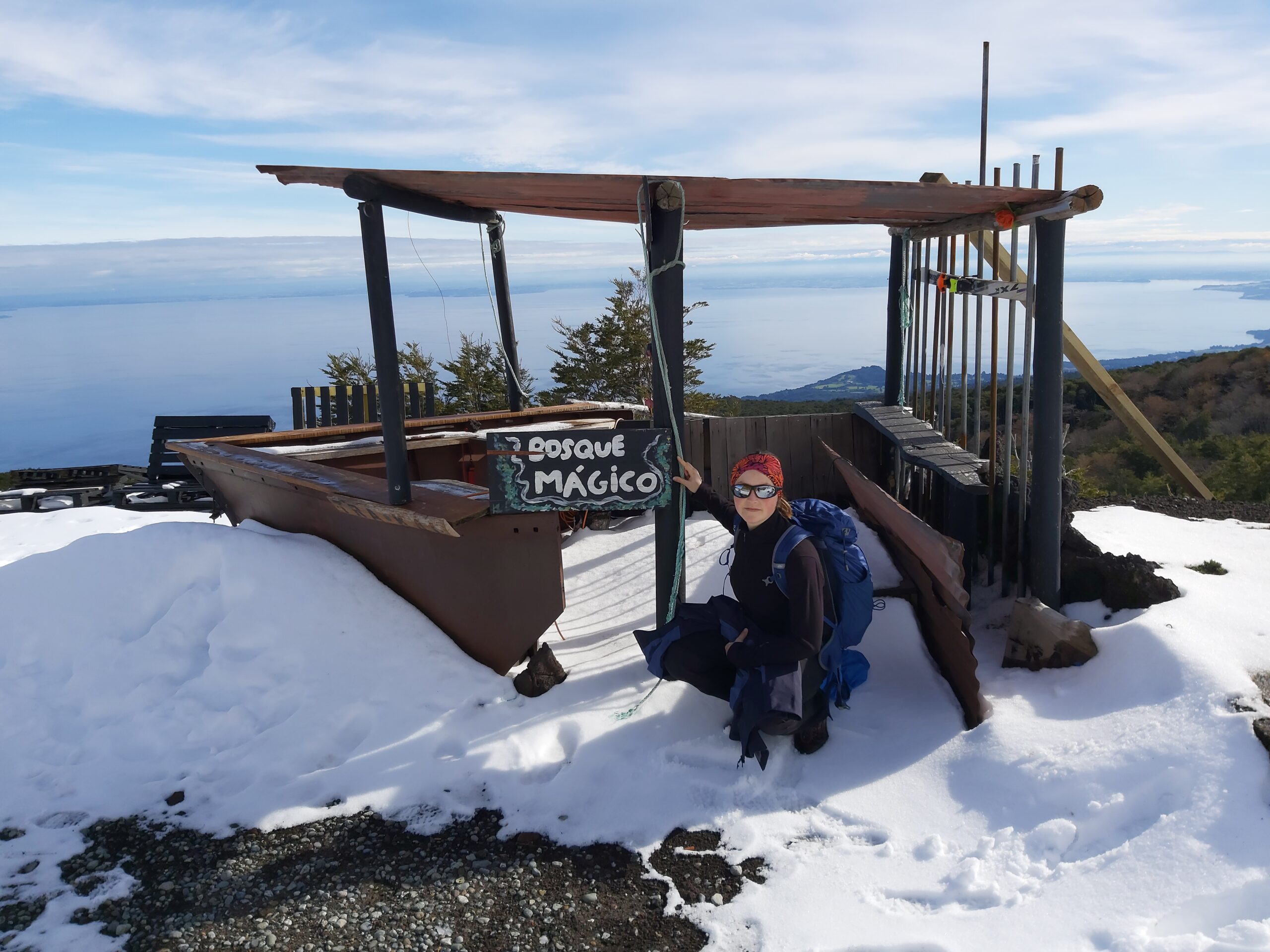
The path goes through a nice forest without any trails in the fresh 10 cm of snow. Well, no human trails, we see some puma trails, the national animal of Chile. After less than 2 hours we are back at the bottom of the ski center where we eat our lunch – bread roll with Avocado – they are soo delicious here. On the way back down to the valley we go significantly slower than on the way up. A red Toyota pickup (50 % of cars on the streets) is very hesitant in every turn. After couple of turns we smell why. We smell brakes. After a couple of minutes he lets us (and other thirty cars in the meantime) pass and waits till the breakes cool down. Or hopefully at least the smoke stops. In the middle of the descent we stop for another short trip to one of the “Avolions” of the volcano called El Sendero. Avolion is the part of the volcano slope where the lava flows during eruptions. So no forests, just small bushes on the black stones. Among the small bushes, there are also many murtas coming in so many colours that Alena starts worrying if they really are all murtas. But as I’m writing this article one week later, they probably were. 🙂 (For my mum, they looked and tasted the same, don’t worry I don’t put random berries in my mouth ;)). On the way back we start getting hungry so we discuss our dinner plans. Until we smell brakes again meaning the road is near. We take empanadas and tortillas from the local bakery and eat them at the lake. Exactly at the start of the sunset, as if we planned that! When eating outside in Europe, usually several wasps come. In Chile, at least one stray dog comes. He turns his sad eyes towards us and lays himself half a meter from our feet. When we are finished, he gets up disappointed and pees at the pillon right next to us. This makes our spot interesting for all dogs passing by. So we stand up, finish our beer and head back to our room before it gets too cold.
In the hostel, we meet a friendly German speaking couple who has similar plans as we do. So we exchange contacts – maybe we’ll meet each other later. When checking out on the following day, we play the favourite touristic game called “The non-chilean residents don’t have to pay 19 % taxes on accomodation if they show a document obtained at the airport and pay the accommodation in US Dollars instead of CLP (Chilean Pesos).” These are the official rules of the game, but each host plays it differently. Sometimes it is ok to pay in cash in Chilean Pesos, sometimes euros are accepted with the daily exchange rate, sometimes euros are treated as dollars 1:1. For bigger hotels, even a credit card payment in dollars works. But the only safe way is to actually bring the US Dollars in cash with you. It turns out we have to pay in cash this time to avoid the tax. Fortunately, Caio, the hostel manager, doesn’t care about currencies so we pay half in euros and half in pesos. This leaves us with less than a 10 EUR equivalent in pesos for our 3,5 hours trip to Panguipulli with tolls on highways having to be paid in cash. On Sunday with no place to get cash on the way.
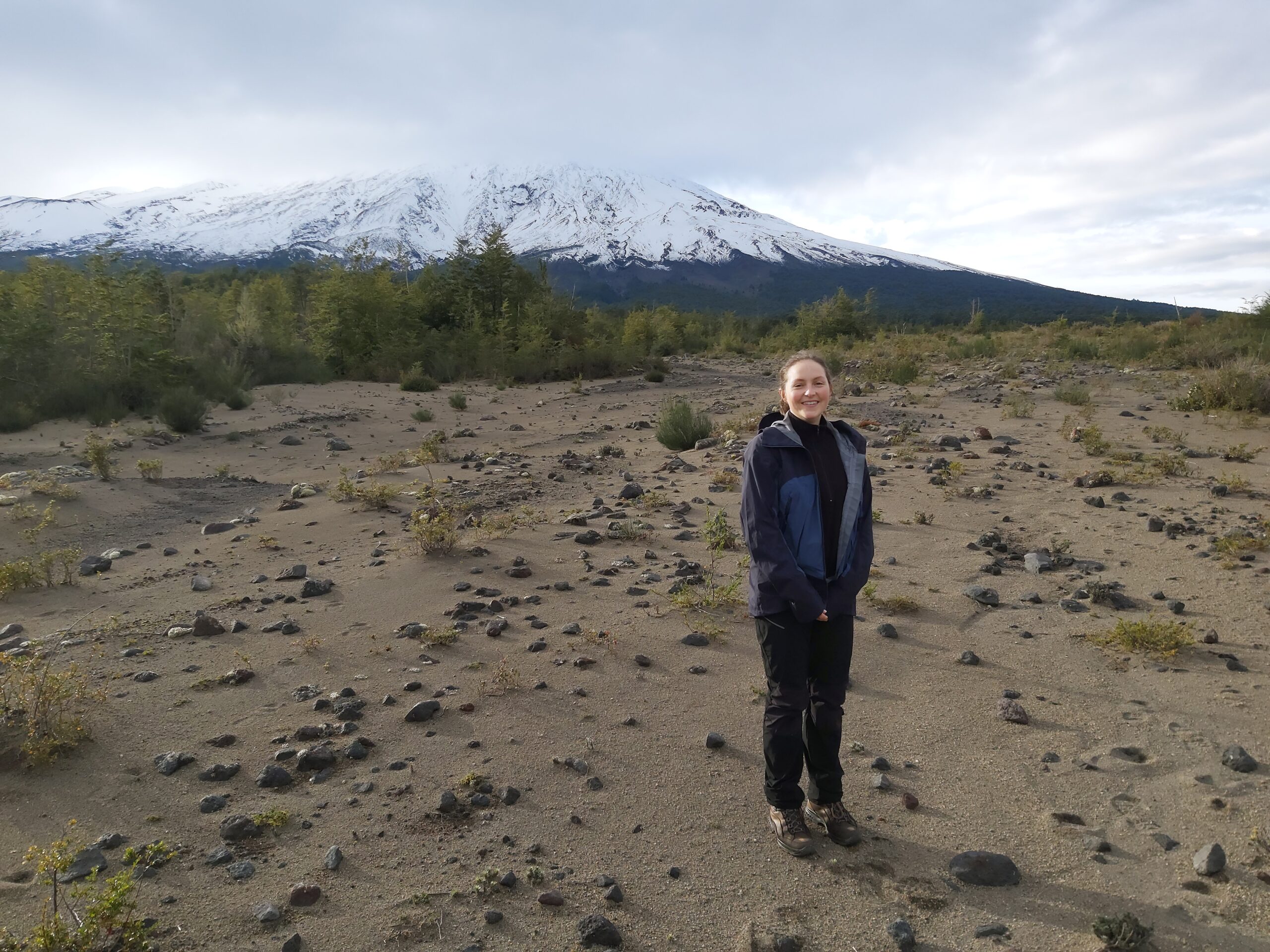
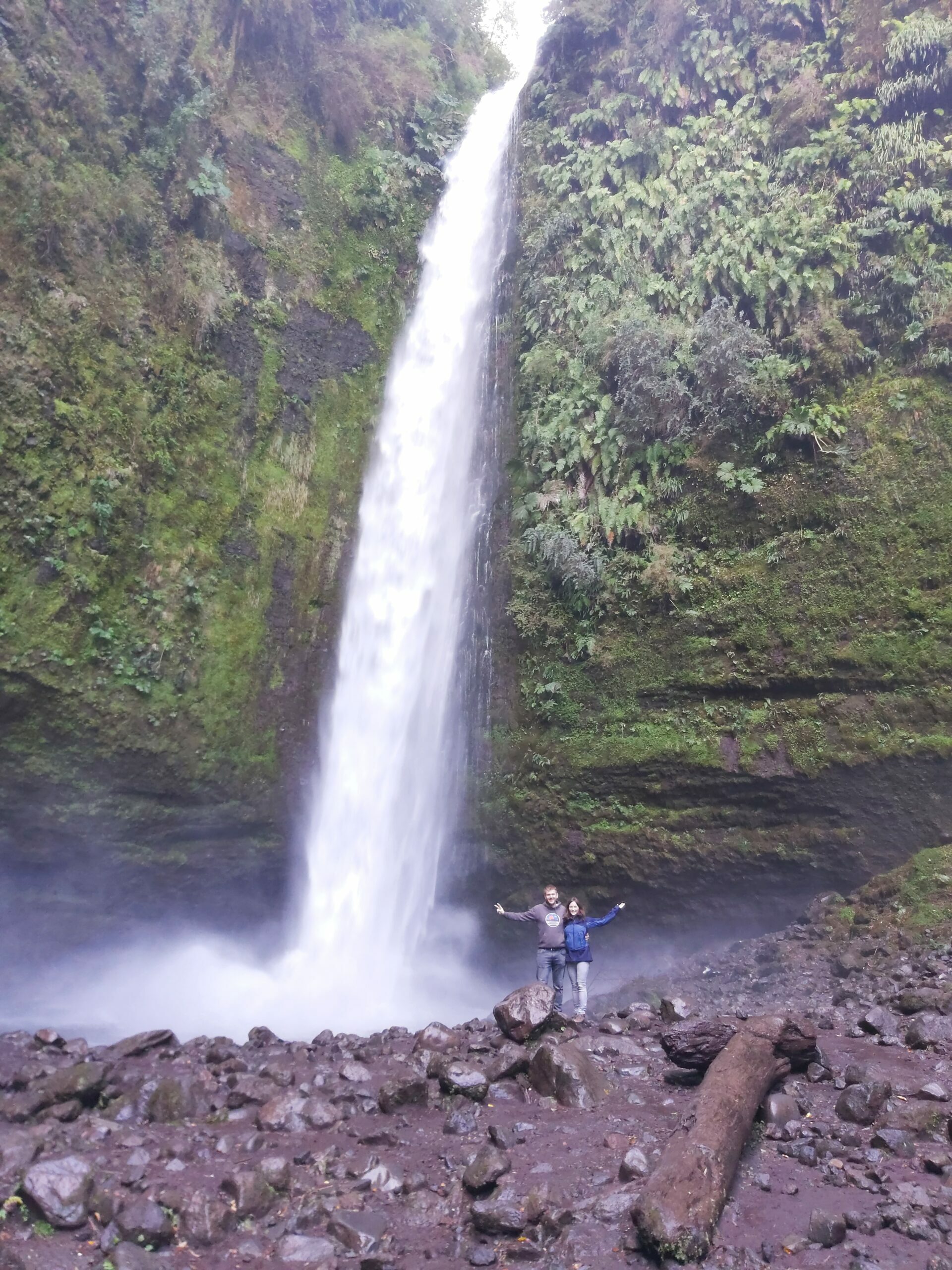
When we stop for the waterfalls on the way, a friendly dog insists to show as the way to the waterfalls and accompanies us 1 km to the official parking lot on the road in a pine tree forest we didn’t dare to pass with our Polo. At the parking lot, there is a elderly lady telling us the way to the waterfalls. When she realizes we didn’t understand much, she shows us a piece of paper in English with the way description and in capitals IF YOU LIKED THE WATERFALLS, PLEASE CONSIDER A VOLUNTARY CONTRIBUTION. Well, this part I understood even in Spanish. Chileans anyway often describe directions for obvious paths in a very high level of detail and insist that you memorize it and are able to repeat it after them. Nevermind that you have the path on your smartphone and there is no other path in the valley. On the way back, we give voluntarily the lady the contribution and hope that it will not make us stuck at the toll gate at the highway. Well, at the end, we still had 1.000 CLP left and I even allowed Alena to get a coffee in the afternoon on our stop at Entre Lagos.